

Have you ever questioned yourself why your water heater does not work as efficiently as before, or has some odd sounds? Among the most widespread causes is the sediment formation at the tank bottom. It is a good idea to empty your hot water heater every now and then and keep it efficient, and keep it running longer, so you can always have hot water when you need it. In this guide, we are going to take the steps one by one through which is easy, safe, and effective, just like a professional plumber would suggest.
1. The Importance of Draining Your Water Heater
Hard water contains minerals that, after some time, are deposited at the bottom of your hot water heater, forming sediment. This accumulation leads to decreased efficiency of heating, rumbling or popping sounds, and may even break the tank. Regular draining of the heater will help you avoid all these problems, improve your water quality, and have your appliance running at its best. Frequent maintenance will also enable you to save some money towards expensive repairs and extend your water heater’s life.
2. Turn Off the Power or Gas
Remember safety first! In the case of electric water heaters, cut off the main panel breaker. In the case of gas heaters, set the gas valve to a position of either the Pilot or off. This eliminates the possibility of the heating element or burner running with an empty tank, which would be hazardous and would damage the heating part. It is also advisable to allow the water to cool down a bit before draining it because draining very hot water may burn.
3. Open the Drain Valve and Open the Water
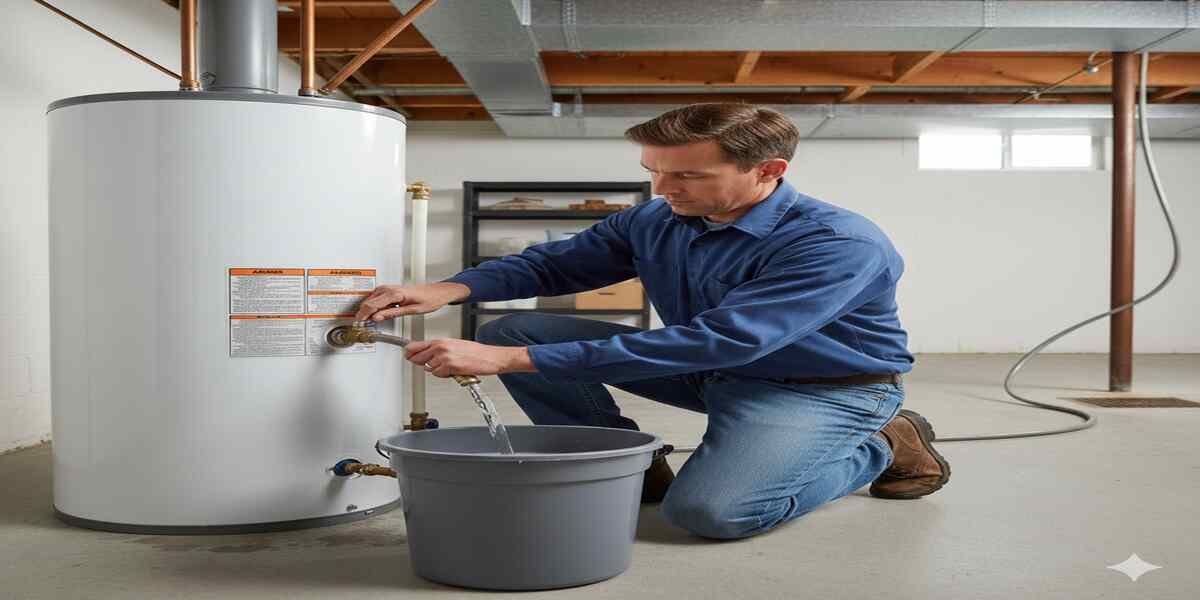
Take the valve, the drain, and open it very carefully, letting the water pass through the hose. To drain faster, turn on a hot water tap at home to allow air to pass through the system. This eliminates the possibility of a vacuum and assists the tank in draining out. Be careful, the water can be hot or warm. Run till the water is clean and there is no sediment at the bottom.
4. Extra Cleanliness: flush the tank
Once the tank is empty, simply turn the cold water on to loosen the sediment in the tank on a short burst. The flowing water will be able to loosen any remaining grit. Then, herewith, flow that water in the drain valve for a few minutes cease on finding the stream is clear again. This is an additional measure that will ensure that your water heater is completely free of mineral deposits and will be more efficient, and will not have further clogs or noises in the future. Proper maintenance can only be achieved by flushing.
5. Close Drain Valve and Refill Tank.
The drain valve must then be closed carefully, and the hose taken away when flushed. Switch on the cold water flow to fill up the tank. Turn on a hot water tap and release the air before pressure develops. Ensure that the tank is full by filling before turning on the power or gas again. Relevant refilling should be done to prevent the heating element or burner.
Conclusion
All you have to do is remember that a swift annual drain is a little thing that will yield large dividends. It maintains your heater in clean operation, it spares you the expense of expensive repairs, and also ensures that you always have hot water when required. Following these easy cleaning tips can make the process even simpler, especially for busy tenants. Now, then, take these very easy steps and have years of worry-free hot water when required, which many expert staff members always highlight.